< npm run dev --port=3000 />
A developer who loves to learn and build.
I solve complex, real-world problems using efficient, high-impact software. From machine learning and resilient web systems to financial modeling and forecasts, I develop efficient, cleanly structured code that's built to last and ready to scale. SWE Intern at NeuroSpark AI working on AI inference infrastructure. Graduating December 2026 and looking for new grad roles in AI infrastructure and ML systems.

/ about me
Hey, I'm Hunter, a CS and Economics major at the University of Michigan. What I really care about is AI infrastructure and the cloud that powers it. The models getting all the attention right now only work because of the systems running underneath them, and I find that layer fascinating. Figuring out how to make distributed compute, cluster orchestration, and deployment pipelines actually hold up at scale is the kind of problem I genuinely enjoy sitting with.
That said, my love for software engineering runs broader than any one area. I got into this because building things is fun, and that curiosity has taken me across full-stack apps, machine learning, and even firmware. I like working close to the hard parts of a system, writing code that is clean and fast, and learning whatever I need to in order to ship something that works.
When I'm not building, you'll find me backpacking in Washington, playing guitar, or trying to fix my golf swing. Let's connect if you're working on something interesting.

/ technologies & skills
Skills & Technologies
Click or hover any skill to see where it was used.
languages
C
C++
CUDA/Triton
Go
Jac
Java
JavaScript
Python
Rust
TypeScript
frameworks
Express
FastAPI
Leptos
Next.js
Node.js
Pytest
PyTorch
PyVISA
React
SGLang
Tailwind
TensorFlow
Transformers
Vue
Vuetify
tools
Azure
CI/CD
Claude Code
CosmosDB
Docker
DynamoDB
FluxCD
Git
GitHub
Kubernetes
MongoDB
NumPy
Pandas
PostgreSQL
concepts
DevOps
Distributed State
GitOps
Hardware
ML/AI
/ experience
- ▹Owning the ground-up build of multi-tenant Kubernetes clusters at a fast-growing AI startup serving hundreds of GPUs
- ▹Built a chip-level GPU reservation system, tuning autoscaling and scheduling to maximize utilization at millions of tokens/day
- ▹Cutting LLM cold-start times by optimizing model weight and image distribution with peer-to-peer transfer and R-Fork
- ▹Hardening security with token federation and building GPU telemetry with Slack alerts, using Claude Code daily
/ education
University of Michigan
Bachelor of Science in Computer Science and Economics
Relevant Coursework
Academic Highlights
Built a distributed key/value store for EECS 491 (Distributed Systems) using the Paxos consensus protocol. The service tolerates node failures while guaranteeing linearizable reads and writes across a replicated state machine cluster.
Designed and trained a Vision Transformer (ViT) in Python for EECS 445 (Intro to ML) to classify dog breeds from images. Applied patch embedding, multi-head self-attention, and fine-tuning techniques to maximize classification accuracy across a multi-class dataset.
LC2K ISA
Throughout EECS 370 (Computer Organization), I developed an ISA simulator for the LC2K architecture in C. This project deepened my understanding of low-level programming, instruction sets, and computer architecture concepts. I implemented a simulator, assembler, a pipeline, and a cache to optimize performance.
Convolutional Neural Network
Developed a Convolutional Neural Network from scratch in Python for EECS 492 (Intro to AI). The CNN classifies what is seen in images from the CIFAR-10 dataset. Implemented with a hyperparameter grid search to optimize model performance.
/ projects
Project Portfolio
Interactive showcase of my development work. Click on a project to learn more.
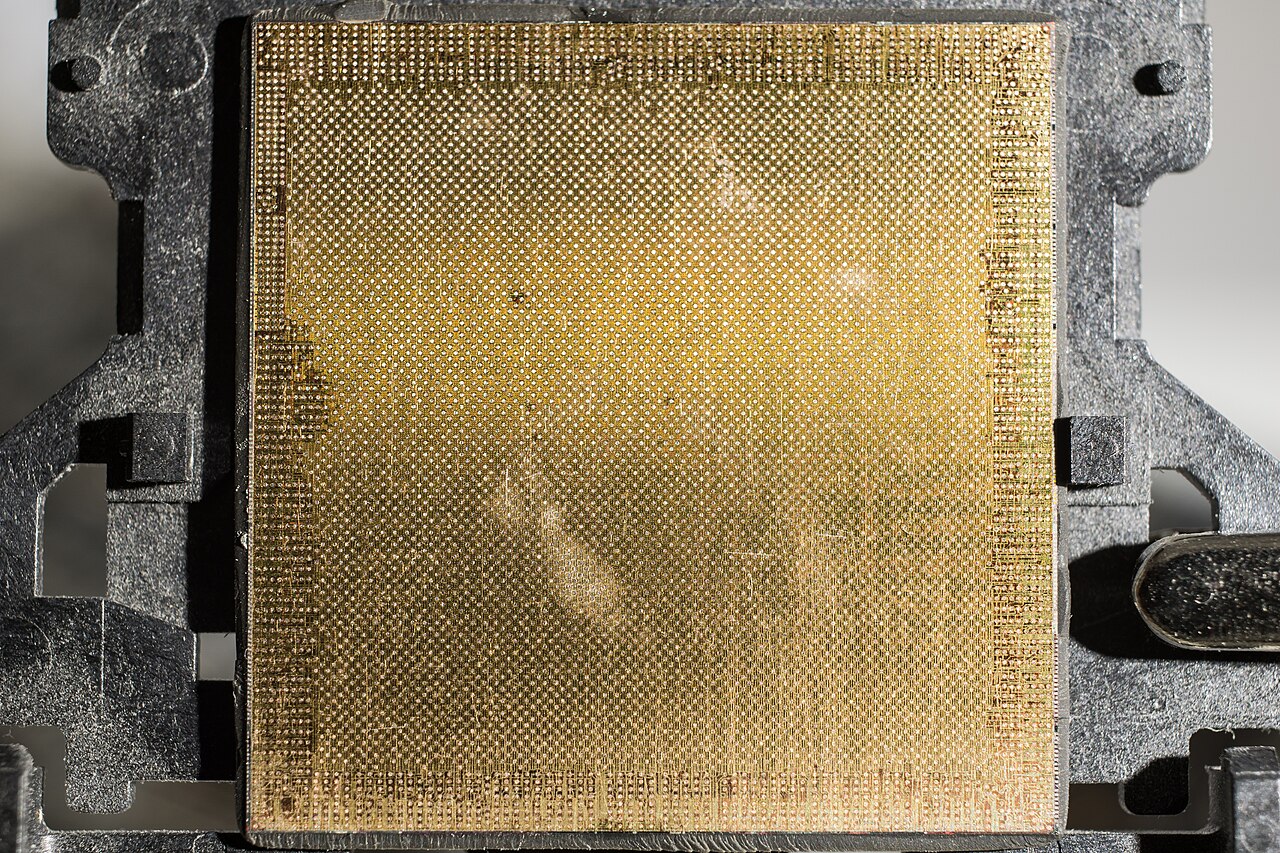
GPU-Accelerated LLM Inference Engine
LLM inference engine with hand-written CUDA/Triton kernels (tiled matmul, fused RMSNorm, attention), a paged KV cache, and a continuous-batching scheduler. Profiled the decode path with Nsight; the fused Triton attention kernel gave a ~16% throughput lift. Served as a streaming FastAPI service on Kubernetes with KEDA autoscaling on queue depth.

Stack
Team project: an iOS job-search app that ingests live listings from 8 job APIs. Multi-agent LLM pipelines handle job-fit scoring, LaTeX resume tailoring, and interview prep across 6 model providers. Agent actions are gated behind hash-bound human approvals and sandboxed Docker browsers.

Relapse Radar
Microsoft hackathon project: a privacy-first early-warning app for people in addiction recovery. It learns a person's normal phone-behavior rhythm, flags a relapse spiral early, and reaches out through someone they chose. I built the live demo screen in React, with the phone UI, a Recharts risk chart, the sponsor's companion view, and a model monitor wired to the FastAPI backend.
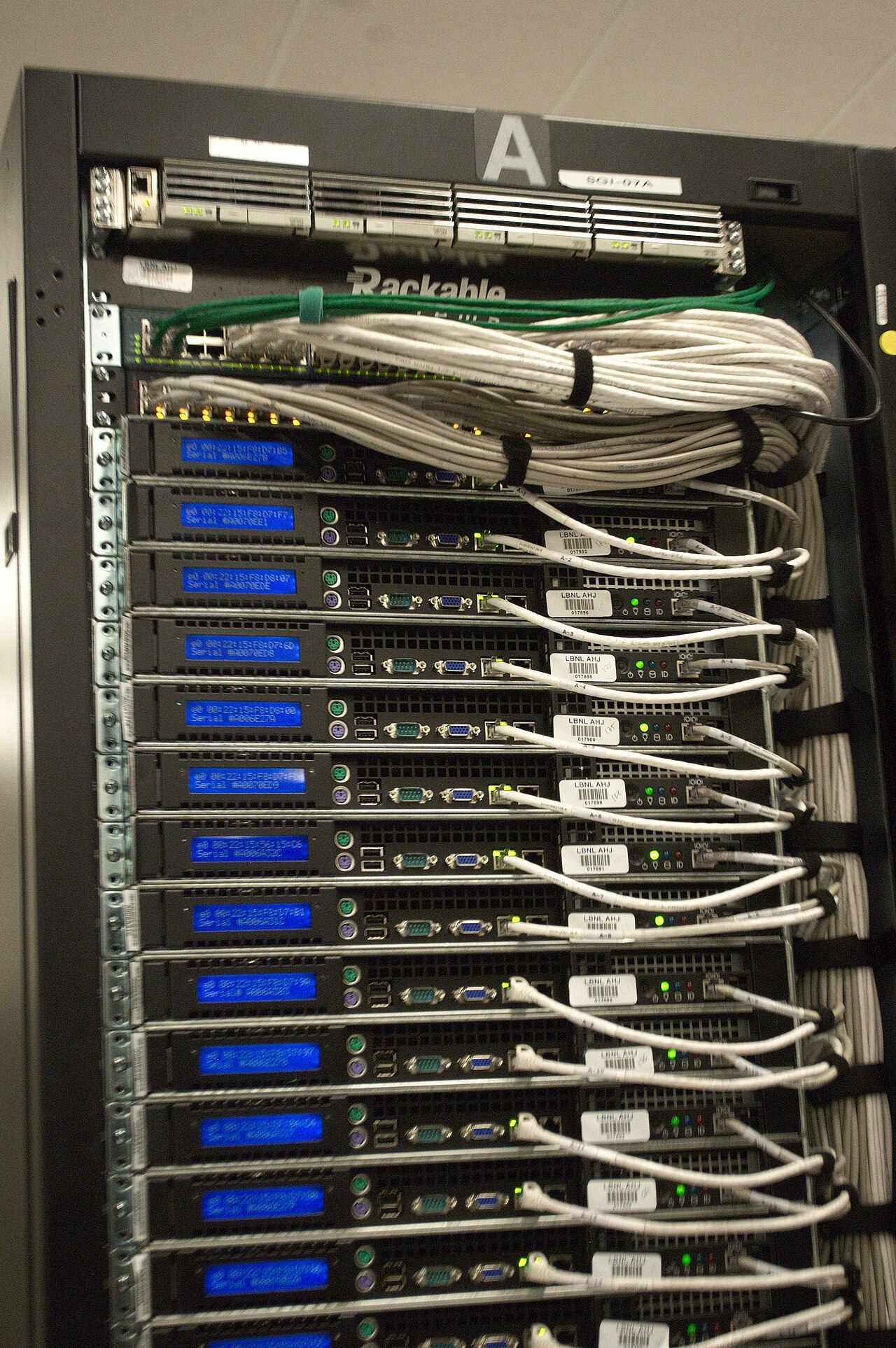
Sharded, Linearizable Key-Value Store
Implemented Paxos consensus from scratch in Go on a replicated log, then built a sharded, linearizable key-value store on top of it with live shard migration via logged ownership transfers. Added log compaction and garbage collection, and kept concurrency race-free with Go's confinement idiom.
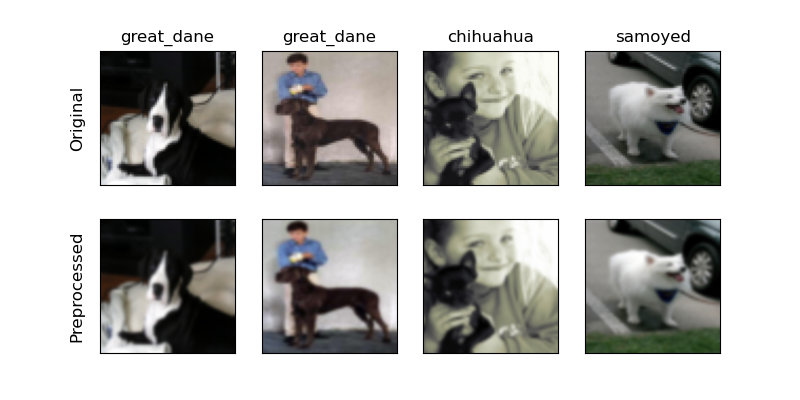
Deep Learning Image Classification Pipeline
Compared CNNs, transfer learning, and a from-scratch Vision Transformer on 8,867 images. Raised test AUROC from 0.75 to 0.83 by pretraining a CNN on an auxiliary breed task and selectively freezing its layers. Built the ViT from multi-head attention and encoder blocks up, reaching 0.955 validation AUROC.

Algorithmic Trading System
Developed an algorithmic trading system using Python. The system analyzes market data and executes trades based on predefined strategies, and tests strategies using historical data.

Rust Compression Algorithms
Inspired by Silicon Valley and Pied Piper. Implemented various compression algorithms in Rust such as Huffman coding, LZ77, and RLE. Tested and managed with a CLI.

S-Parameter Analysis Automation
Developed a Python program to automate S-parameter analysis using a TC-720 temperature controller and VNA. Includes interactive GUI for data visualization and user-friendly analysis interface.

Credo EV Charger Management + Queue System
Developed a comprehensive EV charger management system for Credo at the 2025 company hackathon, including real-time monitoring, queue management, and user-friendly interfaces. The system optimizes charger usage and enhances user experience. Won best implementation and technical achievement.

This Website!
The website you are currently viewing, built with Next.js, Tailwind CSS, and TypeScript. Features cyberpunk aesthetics, interactive components, and responsive design.

Hill Street Run Club Website
As VP of Communications for the Hill Street Run Club at UMich, I built a website to promote the club and its events. Features interest forms, event calendar, and membership database.

GreekLink
Anonymous social media platform connecting Greek life communities nationwide. Led both front-end and back-end development for this community-focused platform.

HTTPie Authentication Contributions
Added a new authentication method to HTTPie, a command-line HTTP client. Implemented username/password authentication with proper parsing functionality.

Chrome Dino Time Travel
Level-based parody of Chrome's Dino game featuring different time periods. Collaborative game development with immersive time-travel mechanics.

Maze Search Algorithms
Implemented various search algorithms to solve mazes, including DFS, BFS, A*, and Dijkstra's algorithm. Developed a visualizer to compare algorithm performance on different maze structures.

Reddit Word Frequency Analysis
Developed a tool to analyze word frequency in Reddit comments using Java using a custom-built HashMap implementation. The tool processes large datasets to identify common words and their frequencies, providing insights into user discussions.

Pursuit-Evasion Simulator
Developed a simulation of Dijkstra's Pursuit-Evasion problem using Java. The simulation models the interactions between pursuers and evaders in a graph.